
Choosing the right e-commerce platform is one of the most pivotal decisions a business can make when selling online. The platform you select shapes everything from storefront design and customer experience to ongoing maintenance, scalability, and total cost of ownership. While the options can be overwhelming, today’s market largely revolves around three dominant models: Shopify, WooCommerce, and headless commerce. Each offers distinct benefits and trade-offs. Understanding these differences is critical to avoiding costly replatforming down the road and ensuring your technology supports—not hinders—your growth.
Shopify has become synonymous with accessible e-commerce. As a fully hosted Software-as-a-Service (SaaS) platform, it removes the heavy lifting of server management, security patches, and software updates. For small to medium-sized businesses that want to launch quickly and focus on selling rather than troubleshooting, Shopify provides a streamlined experience. You can set up a professional-looking store, add products, connect a payment processor, and start accepting orders in a single afternoon.
Beyond the basics, Shopify’s extensive theme marketplace and app ecosystem allow businesses to extend functionality without custom coding. Need subscriptions, advanced analytics, or multi-currency support? There’s likely an app for that. However, this convenience comes with recurring monthly fees, transaction fees (unless you use Shopify Payments), and certain architectural constraints. Customizing the checkout process or achieving highly unique user flows is not as straightforward as on open-source alternatives. Yet, for businesses that value reliability, 24/7 support, and a low barrier to entry, Shopify frequently hits the sweet spot. To learn more about website platform options, read WordPress vs Headless Site Builders.
WooCommerce is an open-source plugin for WordPress, powering a significant portion of the world’s online stores. Its greatest strength is unparalleled flexibility. Because it runs on WordPress, you have full access to the codebase, which means you can customize every detail—from the checkout fields and email templates to the product page layout and beyond. The WordPress ecosystem additionally gives you access to tens of thousands of plugins, SEO tools, content marketing features, and a massive community of developers.
This freedom, however, shifts responsibility squarely onto the store owner. You must procure your own hosting, implement security measures, manage performance optimization, and keep the core software along with all plugins and themes consistently updated. While the plugin itself is free, costs accrue through premium hosting, premium themes, paid extensions, and potentially developer hours. For businesses with in-house technical knowledge or a relationship with an agency, WooCommerce provides a highly adaptable foundation that can evolve with the business. It’s particularly attractive for those who already rely on WordPress for content marketing and want a tightly integrated commerce layer.
Headless commerce represents a more modern architectural approach. It decouples the front-end presentation layer from the back-end commerce engine, allowing each to operate independently and communicate via APIs. In practical terms, a business might use a headless commerce platform like Shopify Plus, BigCommerce, or a specialized service like CommerceTools to manage products, carts, and payments, while building a completely custom storefront using frameworks like Next.js, Gatsby, or Vue pStorefront.
The result is extreme creative freedom and performance potential. You can deliver lightning-fast experiences, integrate seamlessly with existing content management systems, and create unique omnichannel journeys—selling not just on a website but across mobile apps, in-store kiosks, and social media channels from a single backend. This approach shines for businesses with complex requirements, high traffic volumes, or a need to blend rich brand storytelling with transactional capability.
Headless commerce is not a plug-and-play solution. It demands significant development expertise, a larger initial investment, and ongoing technical stewardship. For an enterprise brand or a rapidly scaling digital-first company, the investment unlocks a level of agility that traditional monoliths struggle to match. For a small shop still validating its market, headless is usually overkill.
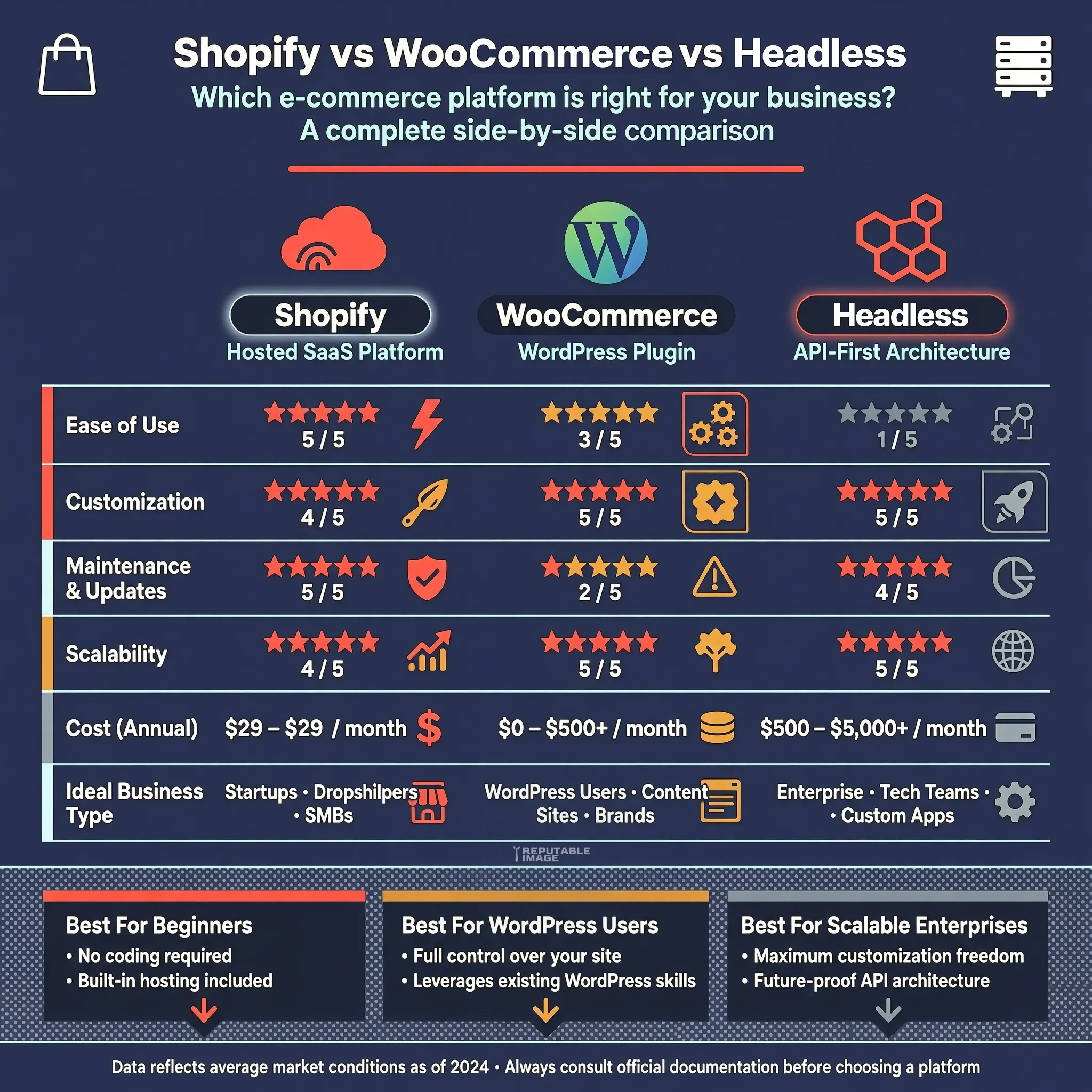
The sticker price of a platform rarely tells the full story. A thorough cost assessment must factor in recurring subscriptions, transaction fees, hosting expenses, developer retainers, and the time spent managing updates.
Maintenance is another key differentiator. Shopify automatically handles updates; your main job is to ensure your theme and apps remain compatible. WooCommerce requires you (or your team) to update all components and test them on a staging site regularly. Headless architectures require active monitoring of APIs, front-end deployments, and security across multiple endpoints—making it a continuous, not a one-time, engineering commitment.
Your platform should be a launchpad, not a bottleneck. Scalability encompasses more than just handling a spike in traffic during Black Friday; it includes adding new product lines, expanding to international markets, integrating with third-party logistics, and introducing loyalty programs or headless front-end touches as your brand matures.
Think about where your business will be in three to five years. A platform that comfortably meets today’s $500K annual revenue might creak under $5 million and omnichannel demands. Migrating later is expensive and disruptive, so projecting future needs—anticipated traffic growth, new sales channels, and team capabilities—should heavily influence your choice. To improve online store performance after launch, read E-Commerce Conversion.
There is no universal “best” platform. The right choice is the one that aligns most closely with your business model, team resources, and growth ambitions.
When in doubt, return to your core objectives: Is speed to market your priority? Is differentiation through user experience non-negotiable? What technical resources do you actually have available? Answering these questions honestly will guide you toward the right infrastructure.
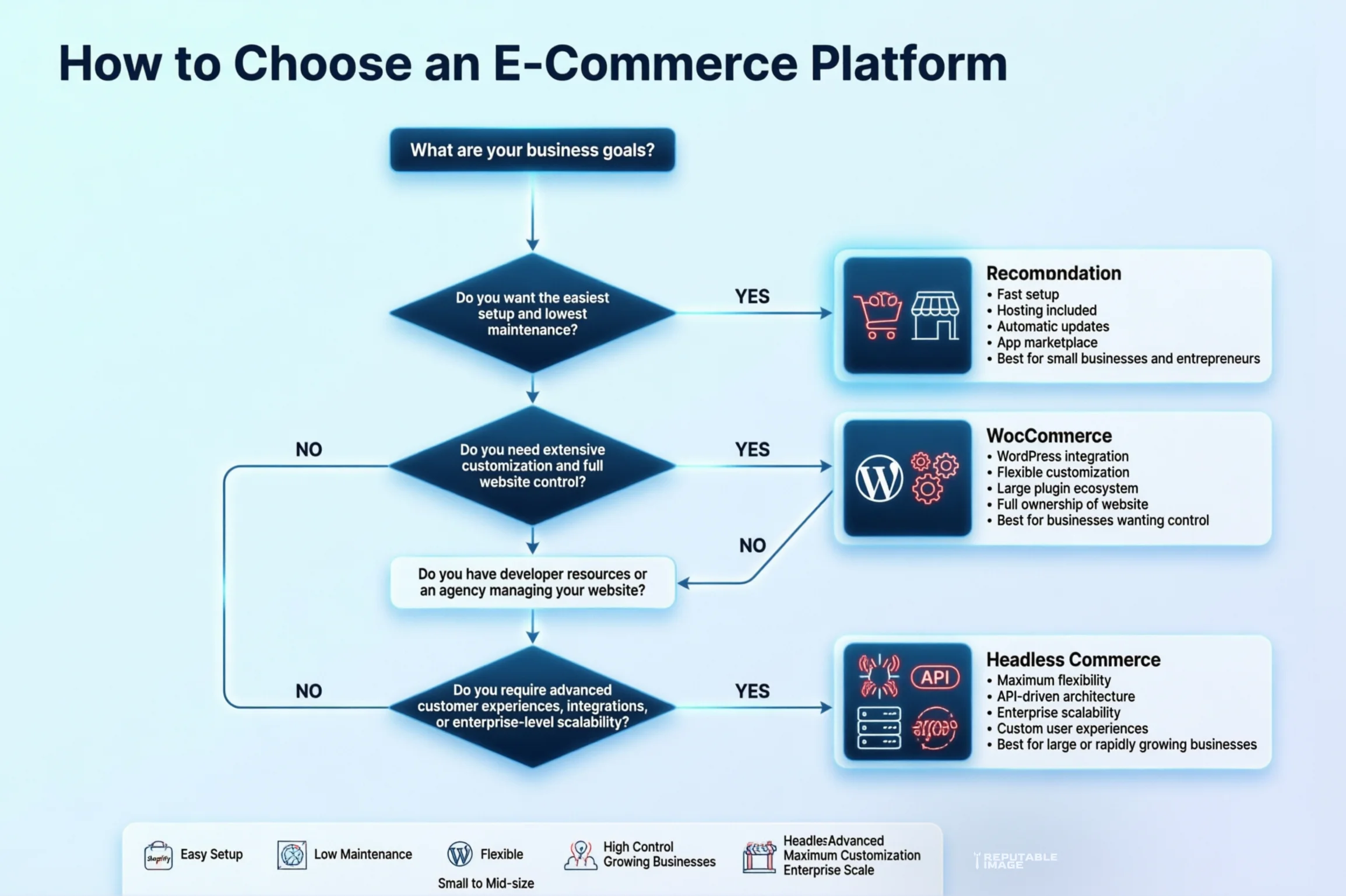
Selecting the right e-commerce platform is not just a technical decision—it is a strategic one that influences your operational agility, customer satisfaction, and ability to scale over the next decade. Whether you’re drawn to the simplicity of Shopify, the flexibility of WooCommerce, or the limitless potential of headless commerce, the key is ensuring your choice supports your long-term vision rather than locking you into avoidable constraints.
At Reputable Image, we help businesses evaluate, build, and optimize e-commerce websites that drive sustainable growth. If you’re ready to choose the right platform and create a stronger online store, click below to Call for SEO help and get started.
