
Ecommerce conversion sits at the intersection of product, experience, and analytics — small improvements compound into meaningful revenue growth. This pillar page collects the playbook you’ll use repeatedly: product page design, pricing & offers, checkout optimization, tests and measurement, and post-purchase flows that increase lifetime value. Think of it as a one-stop reference for tactical improvements you can deploy, test, and scale.
Product pages are the conversion backbone — they must answer questions fast, build trust, and reduce cognitive load. Key elements include a clear value headline, competitive price, product imagery with zoom and contextual shots, and scannable benefits (bullets). Add social proof: reviews, star ratings, and a short FAQ that resolves common objections without forcing a click.
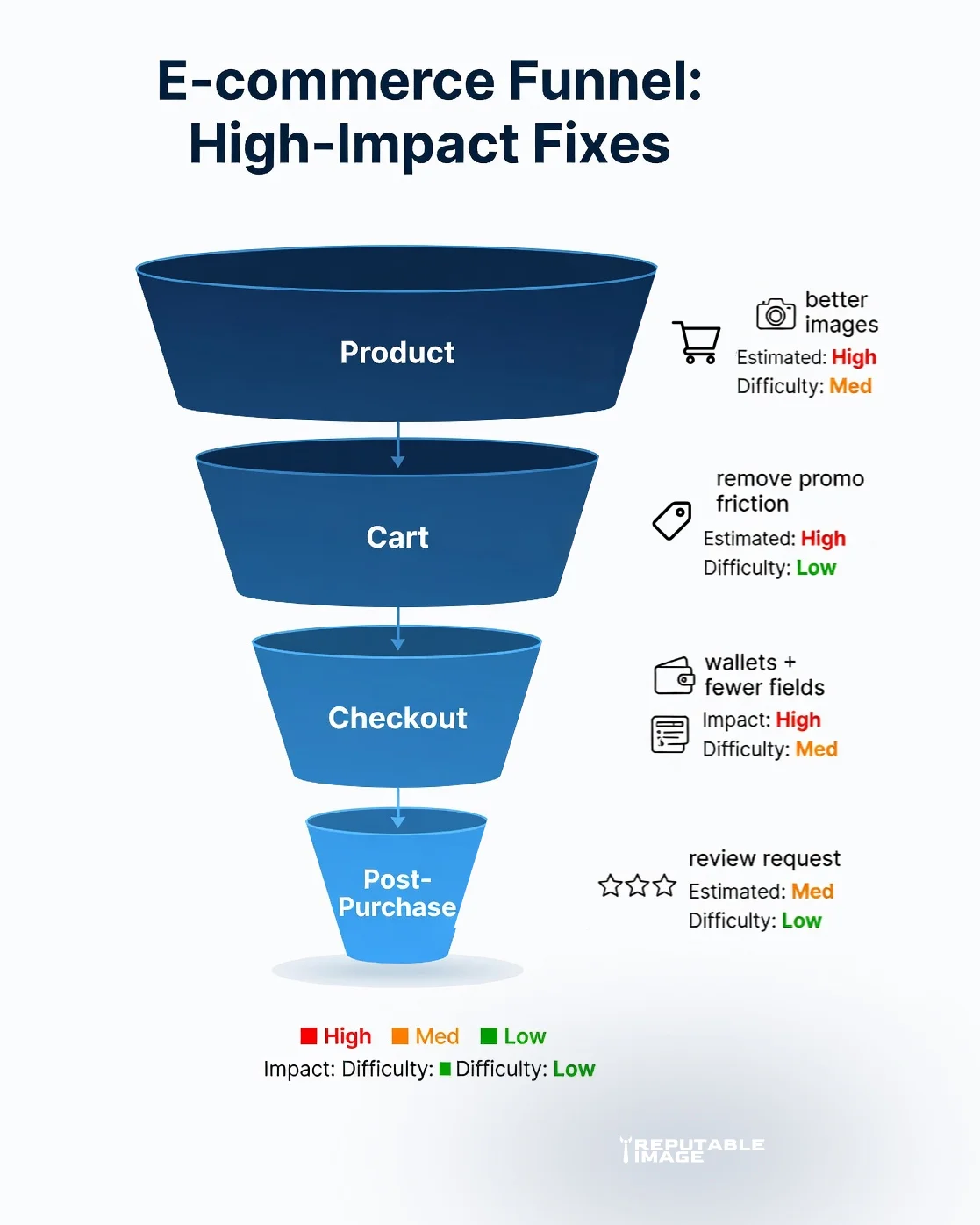
Lead with benefits, not features: tell customers what the product does for them in one sentence. Use microcopy to address friction points — shipping, returns, and guarantees — directly next to the add-to-cart. Highlight urgency or scarcity carefully (low stock) but avoid deceptive tactics that undermine trust. Where possible, show the price per use or per month to make value easier to evaluate.
A fast, frictionless checkout is nonnegotiable — even small delays or extra fields spike abandonment. Optimize performance on the checkout routes (server caching, critical CSS, defer analytics), reduce required fields, and enable wallets (Apple Pay/Google Pay) for one-tap completion. Offer guest checkout and never force account creation before purchase.
A fast, frictionless checkout is nonnegotiable — even small delays or extra fields spike abandonment. Optimize performance on the checkout routes (server caching, critical CSS, defer analytics), reduce required fields, and enable wallets (Apple Pay/Google Pay) for one-tap completion. Offer guest checkout and never force account creation before purchase. To audit checkout speed and performance fixes, see Checkout optimization: speed, UX, and reducing cart abandonment.
Inline validation that explains how to fix input problems reduces drop rates; avoid cryptic error codes. For payment declines, show clear next steps (try another card, contact support) and capture email early so you can recover the cart. Show a clear progress indicator on multi-step flows to prevent abandonment from uncertainty.
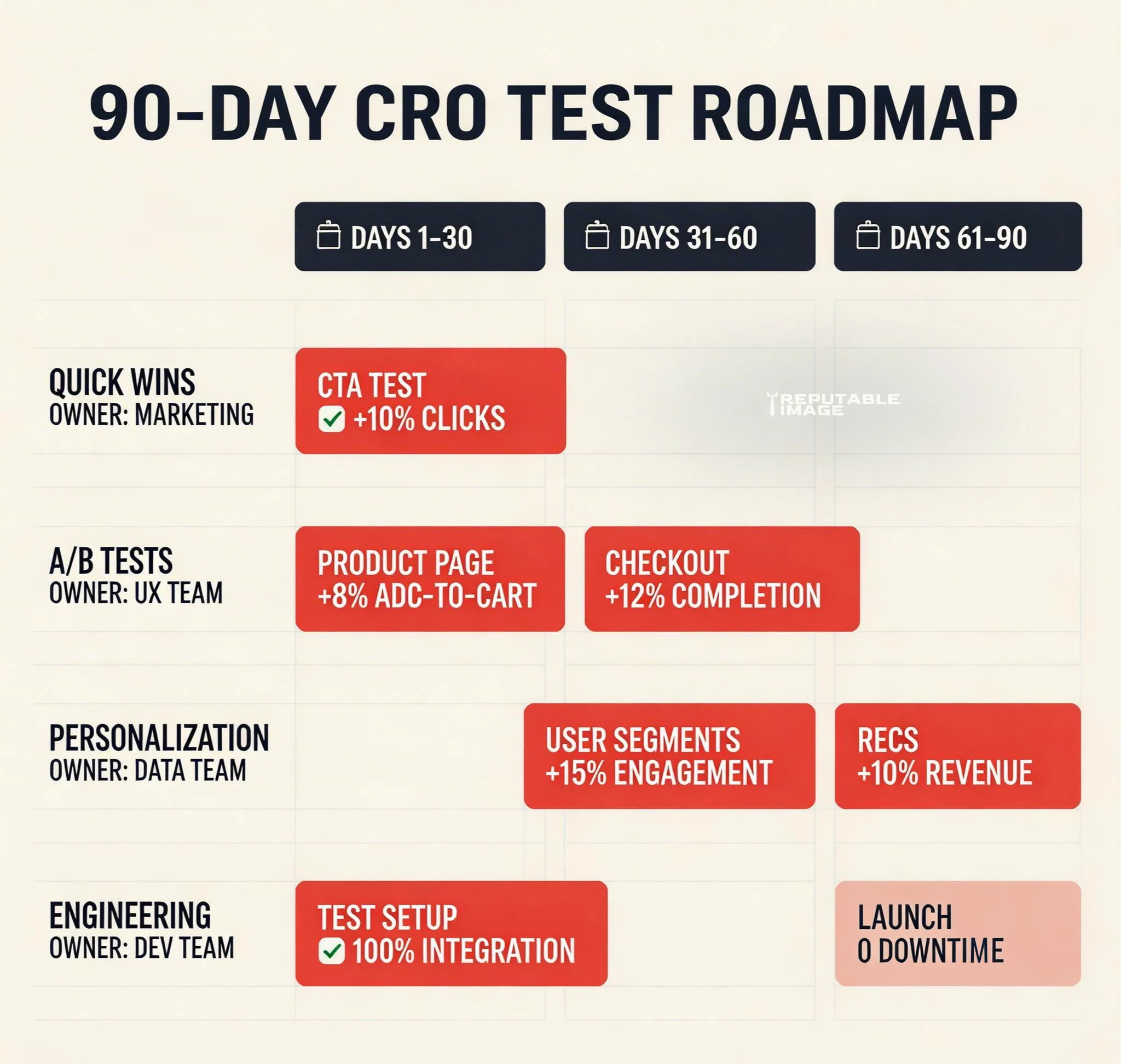
Adopt a hypothesis-driven approach: make a measurable prediction (e.g., “showing delivery date increases conversion by 2%”), run an A/B test, and evaluate on revenue per visitor. Prioritize tests by expected impact and cost to implement — use an ICE or PIE scoring model. Keep tests small and iterative; winners should be validated across segments and devices. For measuring experiments and user flows, see Using Analytics to Improve UX.
Start with simple segments — new vs returning, traffic source, cart size — and tailor CTAs or offers accordingly. Personalization increases relevance but raises implementation complexity; use a phased approach with server-side flags or client-side experiments before committing to full personalization stacks. Measure lift on conversion and AOV.
Measure visits → add-to-cart → checkout starts → purchases and segment by device, campaign, and product. Track micro-metrics too: time to add-to-cart, time to checkout, payment error rates, and form error frequency. Use UTM tags and enhanced e-commerce events so tests and paid campaigns are clearly attributed.
Keep the UI minimal and reveal extra options only when needed — for example, show shipping options after the address is entered and hide tax summaries until the totals stage. Provide inline help text and lightweight tooltips for fields likely to confuse users (taxes, duty, or coupon rules). Microcopy that anticipates questions reduces hesitation.
Create a CRO playbook and release checklist that includes hypothesis, implementation owner, QA steps, rollback criteria, and measurement plan. Prioritize changes into quick wins, mid-term experiments, and long-term engineering projects. Make data accessible — dashboards for conversion funnels and experiment outcomes — so stakeholders can make informed tradeoffs.
Avoid over-reliance on vanity metrics (clicks, impressions) instead of revenue per visitor. Don’t confuse correlation with causation — seasonal changes can mask test results. Beware of “feature creep” on product pages: each extra widget risks reducing clarity and adding load time.
Month 1: audit checkout speed, reduce fields, enable wallet payments.
Month 2: run product page visual A/B tests for hero and CTA.
Month 3: introduce bundled offers and test thresholds for free shipping.
Use impact/cost scoring to prioritize.
Ecommerce conversion is a process: optimize the smallest leaks first, validate changes with experiments, and build for continuous improvement. At Reputable Image we help teams audit funnels, run CRO experiments, and implement technical fixes that move revenue fast. Click the button below to get a free conversion audit and a prioritized roadmap tailored to your store.
