
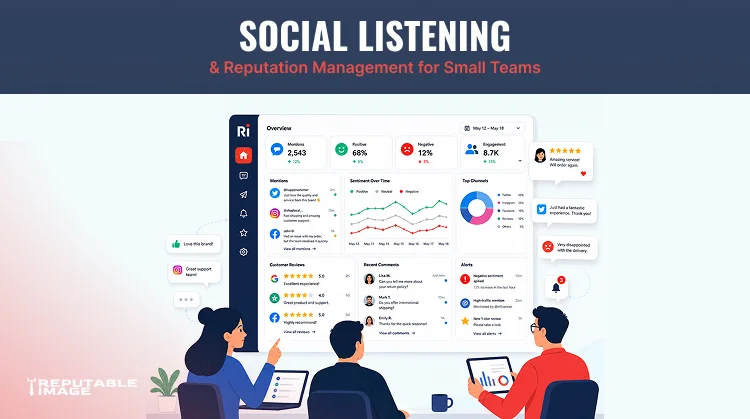
Many businesses assume that social media management is a one-and-done activity—craft a clever caption, hit publish, and call it a day. In reality, the most valuable opportunities often unfold after content goes live. Customers talk about brands in comment threads, leave reviews on third-party platforms, ask product questions on Twitter, and share unfiltered experiences in community forums. These conversations—whether you’re listening or not—shape how your brand is perceived, trusted, and recommended. Social listening and reputation management help businesses tune into these critical moments. And the best part? Even lean teams can use these strategies effectively to protect their brand and deepen customer relationships.
Social listening is the active process of monitoring online conversations across social platforms, review sites, forums, blogs, and news outlets to understand what is being said about your brand, products, industry, and competitors. Unlike simple social monitoring—which focuses narrowly on counting likes, shares, and direct @mentions—social listening captures the broader narrative. It identifies sentiment shifts, recurring pain points, and emerging trends that would otherwise go unnoticed.
For example, a coffee shop might notice a spike in Instagram posts tagged at its location but without a direct handle mention. Monitoring tools surface those indirect signals, revealing that customers love the new seasonal drink but consistently mention slow service during the morning rush. That’s a rich insight that direct mentions alone might never deliver. Social listening turns ambient noise into actionable intelligence, helping businesses refine their products, services, content strategies, and customer experiences based on real-world feedback.
A business’s reputation has always been valuable, but in the digital age it has become both highly visible and frustratingly fragile. Research shows that a vast majority of consumers now read online reviews before making a purchase decision, and they often trust those anonymous opinions as much as personal recommendations. Every star rating, every comment, and every shared experience contributes to a cumulative perception that can either open doors or quietly close them.
A strong reputation functions as a competitive moat. It lowers customer acquisition costs, supports premium pricing, and creates a buffer when things go wrong. Conversely, a weak or neglected reputation can cripple conversion rates and scare off talent. What makes online reputation especially challenging is its permanence—a single negative review or an unaddressed complaint can resurface in search results for years. Managing that perception proactively isn’t a luxury; it’s a prerequisite for brands aiming to sustain growth in an era of radical transparency.
Brand mentions occur constantly, often in spaces you wouldn’t think to check. Customers might praise your product in a Reddit thread, vent frustration on X (formerly Twitter), or post an unboxing video on TikTok without tagging your official account. Monitoring these mentions ensures you’re never the last to know.
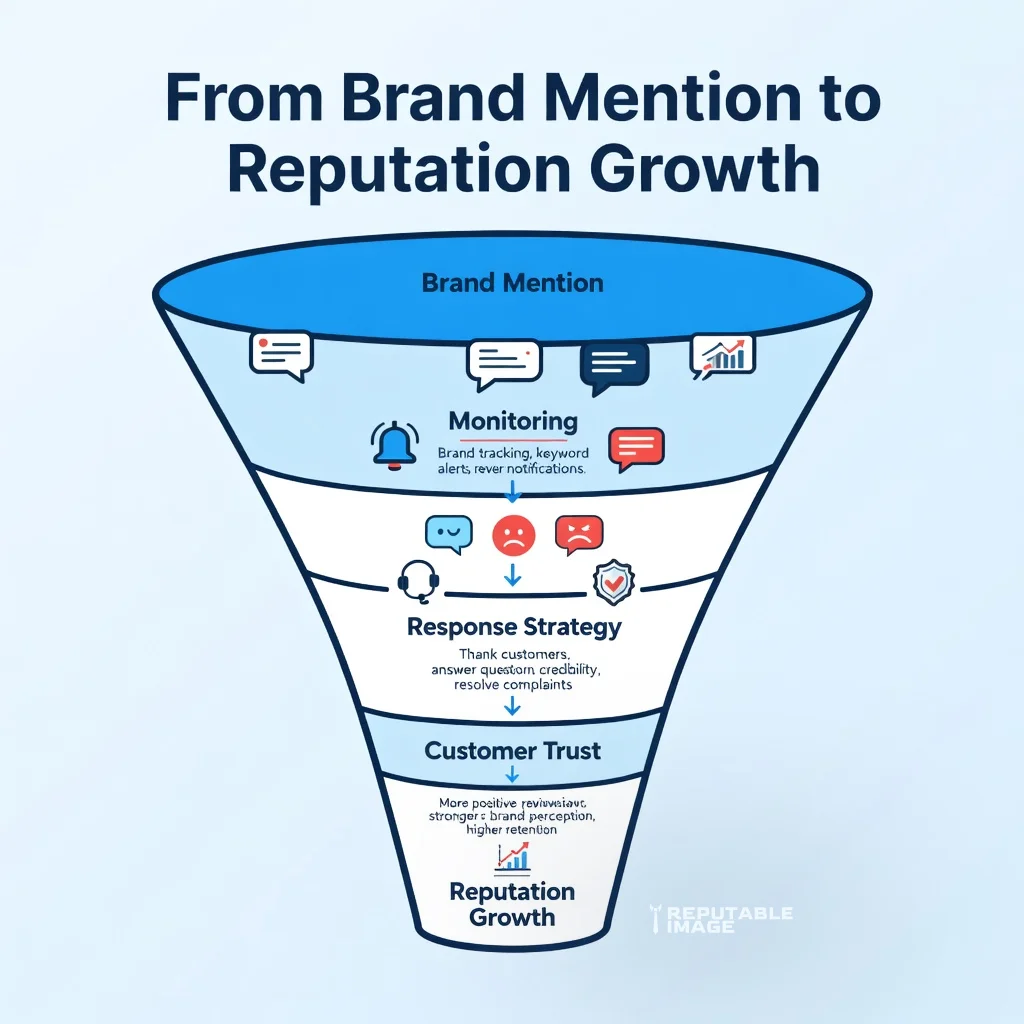
A robust monitoring strategy separates mentions into categories: positive praise that deserves engagement, customer service queries that need a swift response, criticism that requires empathetic problem-solving, and misinformation that demands gentle correction. Speed matters immensely here. A study by Sprout Social found that 40% of consumers expect a response within the first hour of reaching out on social media, and 79% expect a response within 24 hours. Timely, thoughtful engagement can transform a frustrated customer into a vocal advocate, while silence can amplify negativity and erode trust.
Moreover, competitive monitoring—tracking mentions of rival brands—can reveal gaps in the market. If competitors are consistently criticized for poor shipping practices or unhelpful support, your business can emphasize those exact strengths in your own messaging, turning their weakness into your differentiator.
Online reviews are the most visible and permanent form of customer feedback. They live on Google Business Profiles, Yelp, industry-specific directories, and social platforms, often ranking highly in search engine results. A string of five-star reviews signals trustworthiness, while a pattern of one-star complaints warns potential customers away. To strengthen your review strategy, read Get More Customer Reviews.
Effective review management begins with claiming your profiles on all relevant platforms and setting up alerts for new reviews. But the real work lies in how you respond. Acknowledging positive feedback with genuine gratitude reinforces the behavior and deepens customer loyalty. It’s a simple act that too many businesses skip, yet it leaves a lasting impression on both the reviewer and anyone reading the exchange.
Negative reviews are equally, if not more, important. A defensive or dismissive reply can escalate a bad situation into a public relations crisis. A thoughtful, empathetic response—one that apologizes for the experience, explains what went wrong without making excuses, and outlines concrete steps to make things right—demonstrates professionalism and accountability. Interestingly, consumers often report that they are more willing to trust a business with a mix of positive and well-handled negative reviews than one with a perfect but seemingly curated score. The goal isn’t to delete all criticism; it’s to show that you listen, care, and improve.
Small businesses rarely have the luxury of a dedicated reputation management department. Instead, success hinges on building lightweight, repeatable systems that make monitoring and engagement manageable without consuming every waking hour.
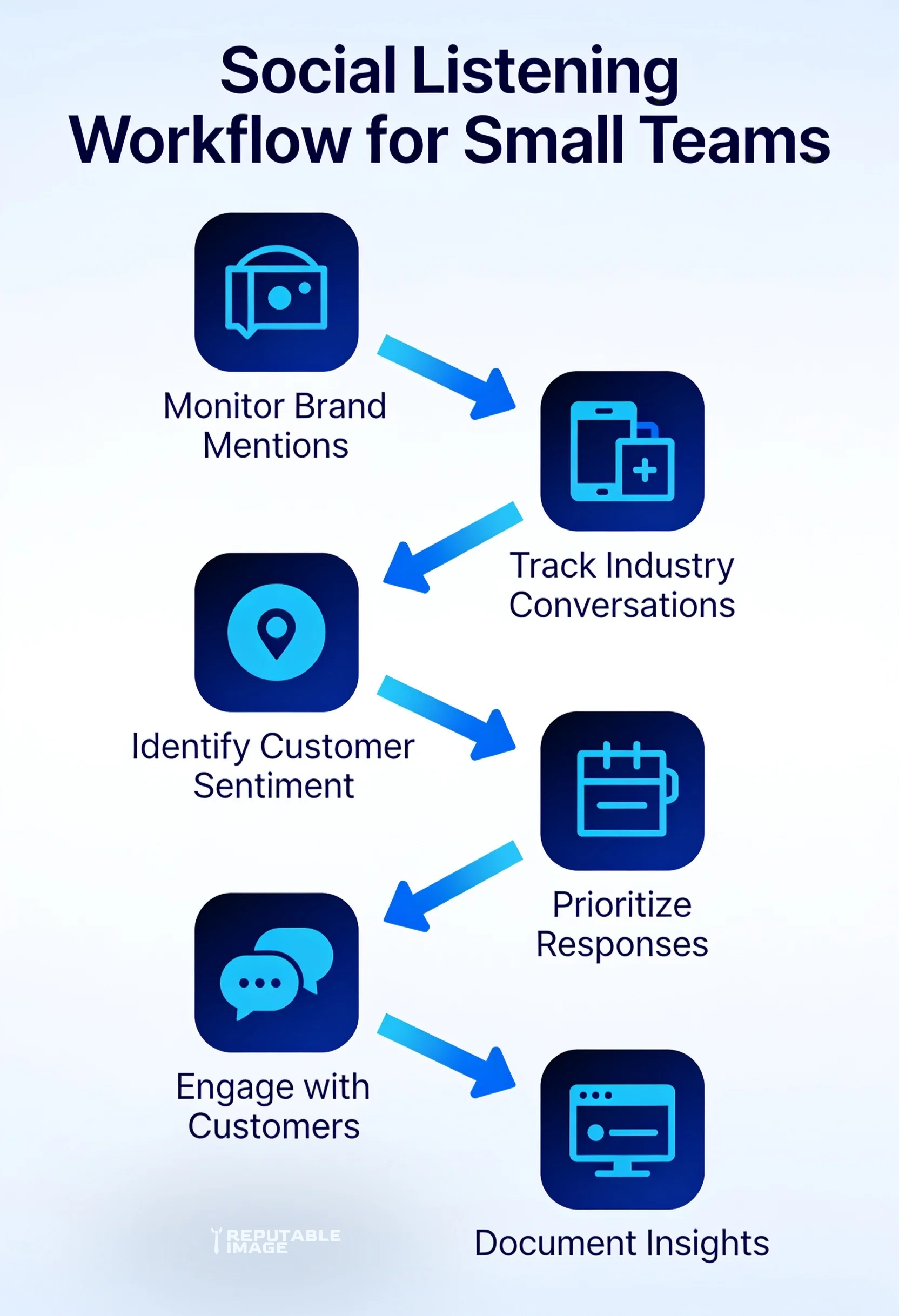
Start by assigning clear ownership: who is responsible for checking mentions, responding to reviews, and escalating serious issues? Define your brand’s voice and response guidelines upfront so that anyone stepping in can maintain consistency. A simple decision tree helps—positive mention? Thank them and perhaps share their post. Customer question? Answer publicly if it benefits others, or move to a direct message if private details are needed. Complaint? Acknowledge promptly, empathize, and take the resolution offline.
Next, establish a realistic monitoring cadence. For platforms where speed is expected—like X or Facebook—checking notifications two to three times daily might be necessary. For review sites and forums, a daily or even weekly scan might suffice, depending on volume. Batch the work into short, focused blocks of time to prevent context-switching and burnout.
Leverage free or low-cost tools to streamline the workload. Google Alerts can track web mentions of your brand name, while platforms like Hootsuite, Buffer, or Sprout Social allow you to monitor multiple social channels from a single dashboard. Many review management tools aggregate feedback from dozens of directories, alerting you the moment a new review appears. While technology can’t replace human empathy, it can dramatically reduce the time spent hunting for conversations.
Finally, document your process. A simple shared document detailing your monitoring schedule, response templates for common scenarios, and escalation paths for serious complaints ensures nothing falls through the cracks when someone is out sick or on vacation. Over time, these habits become second nature—a seamless part of your customer relationship management rather than an added burden.
Gathering data is useless unless it leads to better decisions. The real power of social listening lies in its ability to close the feedback loop, transforming raw conversations into concrete improvements across marketing, product development, and operations. To support long-term audience growth, read Social Media Templates That Convert.
When you notice the same questions appearing repeatedly—say, confusion about your return policy or uncertainty about how a feature works—that’s a signal to update your website FAQ, create an explainer video, or publish a clarifying post. Recurring complaints about a specific product flaw should flow directly to the product team for investigation. Emerging trends in competitor conversations can inspire new content ideas, service offerings, or positioning adjustments.
Beyond operational fixes, acting on feedback sends a powerful message. When customers see that their suggestions lead to visible changes, they feel valued and invested in your brand’s success. This sense of co-ownership fosters deep loyalty and turns casual buyers into evangelists. Highlighting these improvements publicly—"You asked, we listened, and we’ve changed X"—closes the loop and encourages even more constructive feedback in the future.
While social listening and reputation management are often viewed through a customer service or public relations lens, they also directly support local SEO and overall search visibility. Search engines consider review signals—including quantity, velocity, and sentiment—when ranking businesses in local packs. Active, positive engagement on social platforms and review sites generates fresh content, increases brand searches, and fosters the kind of authentic backlinks that algorithms reward.
Consistent social listening also unearths keywords and topics that real customers use, not just the sanitized phrases that marketers assume. These insights can guide your content strategy, helping you create blog posts, landing pages, and FAQs that directly address the language and concerns of your audience, ultimately boosting organic traffic.
Social listening and reputation management are not passive activities reserved for large corporations with dedicated PR teams. They are essential, achievable practices for businesses of any size that want to understand how customers truly perceive their brand, address concerns before they spiral, and uncover opportunities for innovation. By monitoring conversations, responding thoughtfully to feedback, and building simple, repeatable processes, even the leanest teams can protect their reputation and forge stronger, more resilient customer relationships.
At Reputable Image, we help businesses strengthen their online presence through comprehensive strategies that improve engagement, trust, and search visibility. If you’re ready to build a stronger reputation and connect more meaningfully with your audience, click below to Call for SEO help and get started.
