
Backlinks remain one of the strongest signals search engines use to evaluate a website’s authority. While many businesses associate link building with expensive SEO campaigns, the truth is that effective strategies exist for organizations of every size—even those with limited marketing budgets. Building quality links is often more about creating genuine relationships, producing valuable content, and thinking locally than it is about making large financial investments. For small businesses willing to play the long game, a thoughtful, consistent approach can steadily improve search visibility without straining resources.
Backlinks act as endorsements from other websites. When a reputable site links to your content, search engines interpret that as a vote of confidence. Over time, a healthy portfolio of relevant, authoritative links contributes to improved search rankings, greater domain authority, and increased organic traffic. For small businesses, this can mean the difference between showing up on page one of Google for a local service query and being buried beneath larger, more established competitors.
However, not every backlink carries equal weight. A single link from a trusted, industry-relevant source—like a local chamber of commerce, a respected trade publication, or a complementary business in your community—can be worth more than dozens of links from spammy, unrelated directories. Search engines have become adept at identifying and devaluing low-quality links, so the focus must be on earning links that genuinely make sense for your audience and your niche.
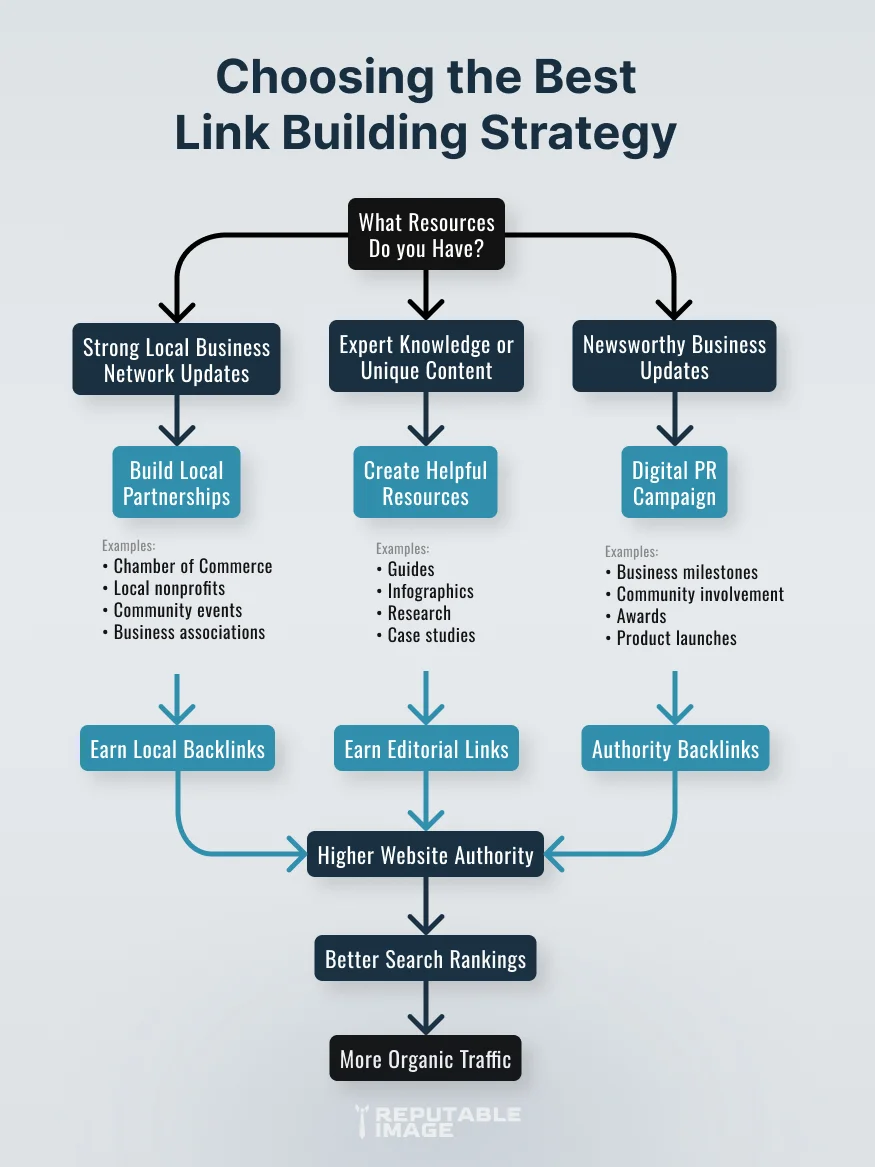
One of the most accessible link building strategies for small businesses is forging partnerships with other local organizations. Community events, sponsorships, nonprofit collaborations, and business associations often create opportunities to earn backlinks naturally—without the need for cold outreach or elaborate campaigns. To strengthen your local search strategy, read Local SEO for Multi-Location Businesses.
Consider sponsoring a local youth sports team, participating in a charity run, or hosting a workshop at a nearby library. These activities frequently result in a mention on the organization’s website, along with a link back to your business. Similarly, joining your local chamber of commerce or a business improvement district typically includes a directory listing, but you can go further by volunteering for committees, speaking at events, or contributing to their blog. Each touchpoint deepens the relationship and increases the likelihood of being linked from their site.
These partnerships provide benefits beyond SEO. They expand your local network, position your business as a community pillar, and generate word-of-mouth referrals. A customer who first encounters your brand through a community event page or a nonprofit’s thank-you post arrives with a warmer impression than one who clicked a generic ad.
Digital public relations focuses on creating newsworthy content that publications, bloggers, and industry websites want to reference. Unlike traditional advertising, which pays for placement, digital PR earns attention by providing information that others find genuinely useful or interesting. For small businesses, this can level the playing field against competitors with larger budgets.
Newsworthy content can take many forms. Company announcements—such as a significant expansion, a new product line, or a major hire—are the most straightforward. But the real power lies in creating resources that serve a broader audience. Original research, surveys, local market reports, and data-driven analyses are particularly effective because journalists and bloggers constantly seek statistics to support their stories. Even a simple survey of local customers about a trending topic can generate a press release that regional outlets pick up.
Community involvement also offers fertile ground for digital PR. A restaurant that launches a program to feed first responders, a salon that offers free back-to-school haircuts, or an accounting firm that publishes a guide to local tax changes are all stories that local media want to tell. Each story creates a backlink and, equally important, reinforces your brand’s credibility and community commitment.
Personalized outreach remains one of the most effective ways to earn quality backlinks, but the approach must be strategic. The days of blasting hundreds of generic templated emails are long gone, and such tactics can even harm your reputation. Instead, small businesses should focus on building genuine relationships with a curated list of relevant organizations, local publications, and industry blogs.
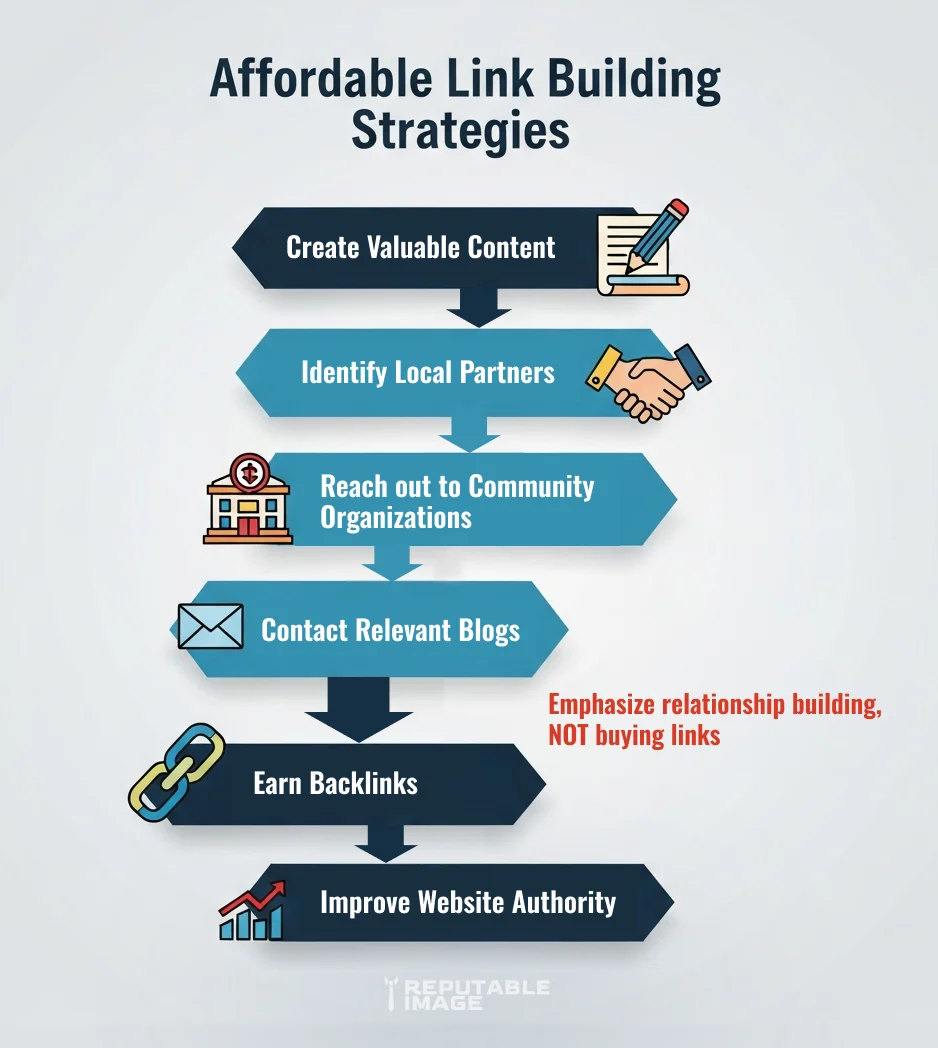
Start by identifying websites that your target audience already visits. These might include local news outlets, neighborhood blogs, regional business journals, industry associations, and complementary but non-competing businesses. Then, find a specific reason to connect. Perhaps you can offer to write a guest article on a topic their readers would appreciate. Maybe you have a resource—like an infographic or a how-to guide—that would complement one of their existing articles. Or perhaps you simply noticed an error on their site (a broken link, outdated information) and can suggest your content as a replacement.
The key to successful outreach is emphasizing value for the other party. Demonstrate clearly how linking to your content benefits their audience. A personalized email that references a recent article they published, explains why your resource is relevant, and offers it without demanding anything in return will outperform a hundred mass emails. Relationships take time to cultivate, but they pay dividends in the form of lasting backlinks and referral traffic.
The easiest links to earn are often those that people genuinely want to share. When you consistently publish helpful, unique, and engaging content, you create a magnet for organic backlinks. This doesn’t necessarily mean producing long-form masterpieces every week—though in-depth resources certainly have their place. A clear, well-designed infographic, a practical checklist, a local resource directory, or an insightful case study can all become reference points for others in your industry or community. To create content that naturally earns backlinks, read Content Repurposing on Social Media, Email, PDF.
Quality content also amplifies every other link building strategy. When you reach out to a website and can point to a genuinely useful resource, your pitch carries far more weight than if you were simply asking for a link. Strong content turns outreach from a favor into a mutual value exchange.
Link building should be viewed as a long-term investment, not a quick-fix tactic. Unlike paid advertising, where results stop the moment you turn off the spend, earned backlinks compound over time, continuing to drive referral traffic and pass authority long after they are acquired. This cumulative effect is why patience and consistency are so critical.
To measure progress, track a few key metrics: the total number of referring domains, the quality and relevance of those domains, the growth in organic search traffic, and any improvements in keyword rankings. Tools like Google Search Console provide free visibility into your backlink profile and search performance, while more robust platforms like Ahrefs or Semrush offer deeper analysis if budget allows.
Don’t be discouraged by slow initial progress. High-quality backlinks are earned, not manufactured, and they often require relationship-building and content creation that take time to mature. A steady, month-over-month strategy of creating content, engaging with the community, and nurturing partnerships will outperform sporadic, high-intensity campaigns that burn out quickly. The businesses that win at link building are those that stay consistent and trust the process.
Effective link building does not require a massive budget. By developing local partnerships, leveraging digital PR, performing targeted outreach, and creating truly valuable content, small businesses can strengthen their online authority and improve search visibility over time. A steady, relationship-first approach not only produces more sustainable SEO results but also builds brand awareness and community goodwill—assets that transcend any algorithm change.
At Reputable Image, we help businesses craft customized SEO strategies that improve authority, visibility, and long-term growth. If you’re ready to strengthen your backlink profile and elevate your search performance, click below to Call for SEO help and get started.
Sources:
1. Google Search Central - "Link Best Practices"
https://developers.google.com/search/docs/fundamentals/creating-helpful-content
2. Moz - "Link Building Guide"
https://moz.com/beginners-guide-to-link-building
