
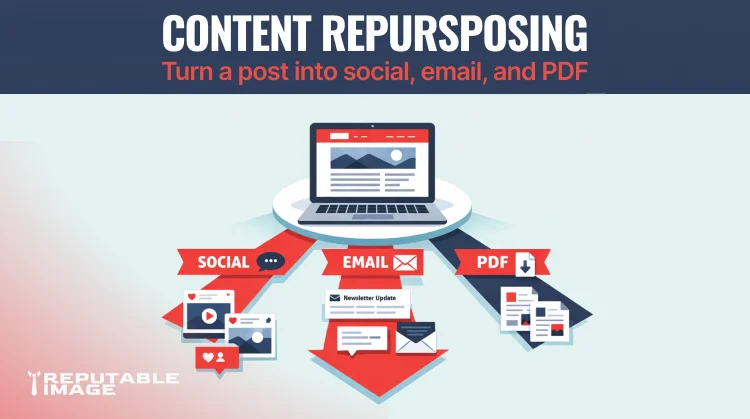
Content repurposing is the practice of taking one strong piece of content and turning it into multiple assets—social posts, email sequences, downloadable PDFs, and more—to squeeze the most value from a single effort. This approach helps small teams amplify reach, maintain consistent messaging, and reduce the constant pressure to invent new topics. Done right, repurposing boosts SEO, grows your email list, and keeps social channels active without burning editors out.
Before you repurpose, choose the right source material: a high-performing blog post, a long-form case study, or a recorded webinar that already shows audience interest. Look for evergreen posts with clear, actionable takeaways and data points you can quote. Use analytics to identify posts with steady traffic, high time-on-page, or strong social engagement as your best candidates for repurposing.
Decide what you want from repurposing: more subscribers, increased conversions, or better brand reach. Each distribution channel has a different audience mindset—social users scroll fast and need hooks; email subscribers want useful, sequential content; PDF readers may want a reference they can keep. Mapping goals to channels ensures your repurposed assets serve distinct purposes rather than duplicating the same content in multiple places.
Consider a rebrand when your core audience, mission, or category has changed—if you pivot markets, merge with or acquire another company, or face deep reputation issues that visuals alone can’t fix. A rebrand is also appropriate when your current brand meaning actively blocks growth (for instance, an outdated name or category mismatch). The cost and disruption are higher, but rebrands can unlock new markets and reset perceptions when done for strategic reasons. (CIM)
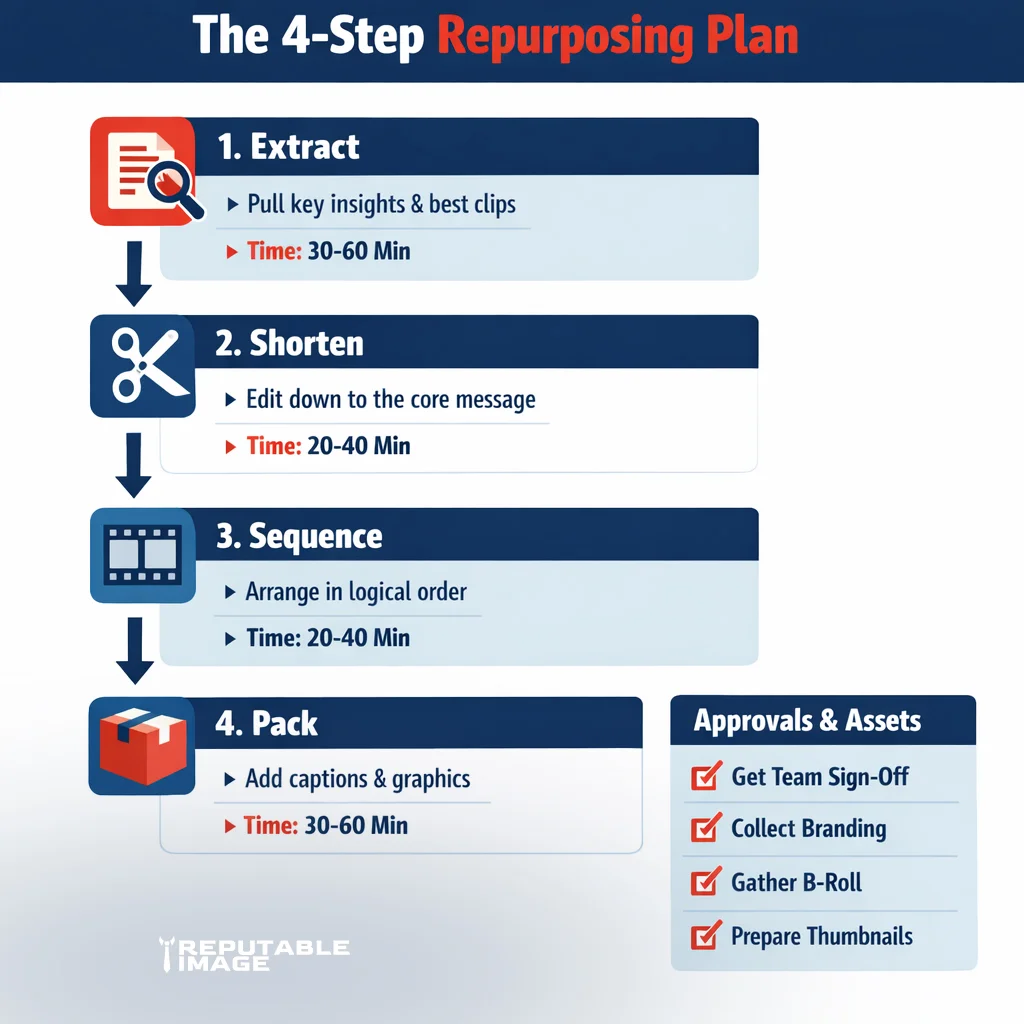
A practical 4-step plan keeps repurposing focused: (1) Extract — pull the core thesis and 6–10 micro points, (2) Shorten — write punchy social captions and headlines, (3) Sequence — arrange points into an email drip or carousel order, and (4) Pack — assemble a PDF with expanded examples and downloadable templates. This plan keeps teams aligned and makes repurposing predictable week-to-week.
Scan the post for quotable stats, bold claims, and quick tips—each one can become a single social tile or short thread. Turn each tip into a 1–2 sentence caption and pair it with a simple graphic or screenshot from the post. For LinkedIn, expand tips into mini threads (3–6 posts) that build a short narrative; for Instagram, convert tips into carousel slides that encourage saves and shares.
Use content repurposing to create a lead-gen email sequence that starts with value and ends with a CTA. A simple 4-email flow works well: Email 1 — summary + lead magnet delivery; Email 2 — expand one key point with an example; Email 3 — case study + social proof; Email 4 — CTA (consultation, download, purchase). Keep each email short, focus on a single idea, and include one clear CTA. For email sequence structure and conversion tips, see Copywriting Strategies for Small Business.
A lightweight PDF positions the repurposed content as a reference guide. Expand the post with checklists, templates, and visual examples that add perceived value. Keep the PDF scannable—use headings, callout boxes, and one actionable takeaway per page—so people can skim and implement quickly. Offer the PDF as a gated download to capture email addresses and feed the email sequence.
Use a single visual system for all repurposed assets: square social tiles, a landscape cover for the PDF, and simple caption templates for Twitter/LinkedIn. Reuse the post’s header image and pull out screenshots or charts to break monotony. For speed, batch-create visuals in a template-based tool (Canva, Figma) and export variants for each platform.
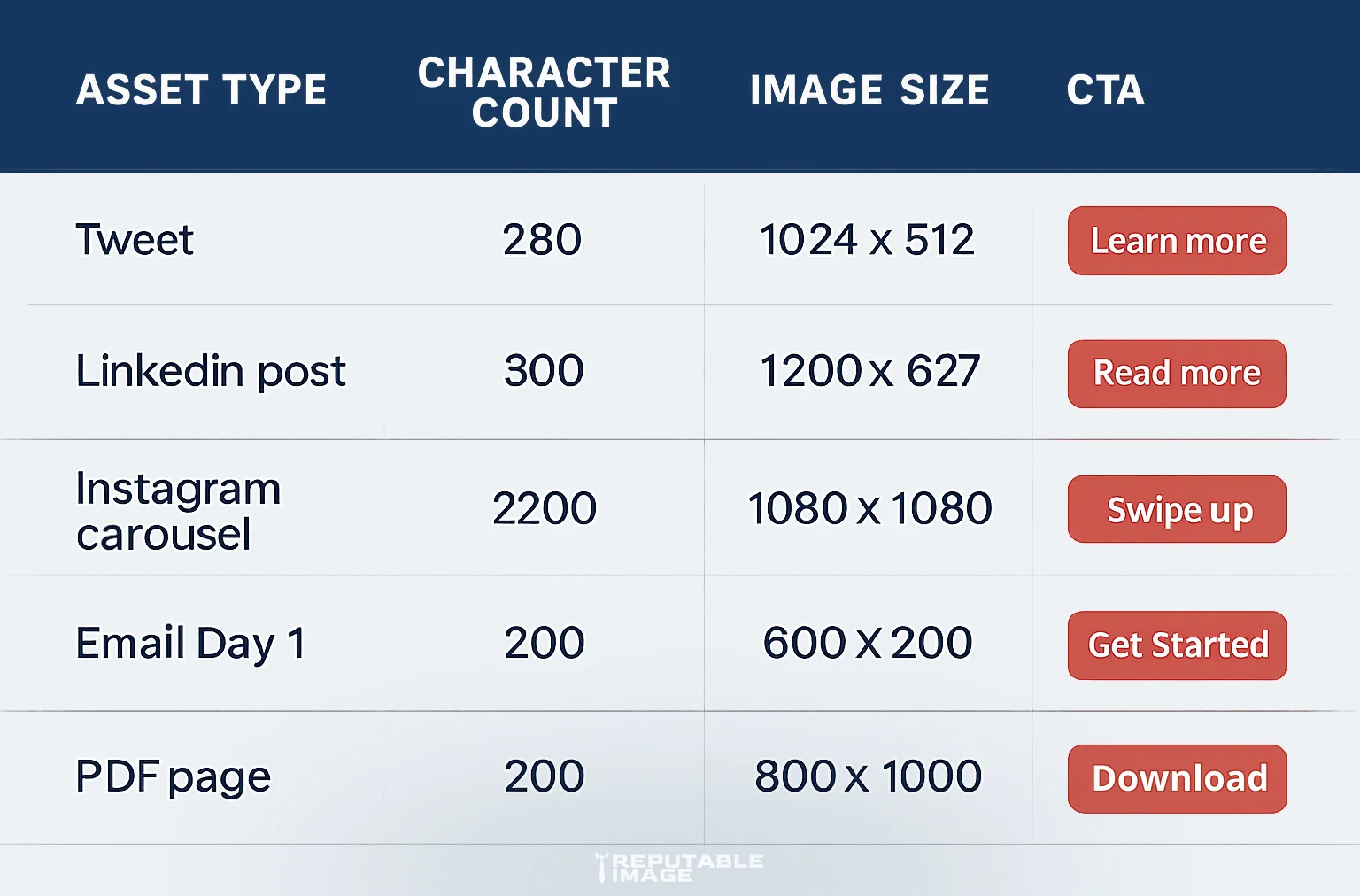
Social CTAs should be low-friction: “Save this tip,” “Share if you agree,” or “What’s your #1 challenge?” Email CTAs can ask for replies, downloads, or bookings and should link to a clear landing page. The PDF CTA can tie back to a consultation or a specific product page. Each CTA should follow the campaign goal and lead users to the next logical step in the conversion path.
Treat repurposing like a micro-campaign: schedule social posts over 2–4 weeks, stagger email sends to avoid overlap, and promote the PDF in week two as a deeper resource. Batching saves time—create all copy and visuals in one session, then schedule posts with a tool (Buffer, Later) and queue emails in your ESP. Staggered distribution helps you measure which channel drives the best conversion for the same content.
Track channel-specific KPIs: social saves/shares and engagement rates; email open, click and conversion rates; PDF downloads and downstream conversions. Tie each metric back to your original goals (audience growth, lead gen, or revenue). Use UTM parameters on all links so analytics can attribute sources and help you refine future repurposing choices. To connect repurposing results to UX and conversion metrics, see Using Analytics to Improve UX.
Test subject lines, social hooks, and cover images to learn what resonates. Small variations—an emotional hook vs. an analytical one—often yield big differences in engagement. Run A/B tests in email and social ad placements for paid boosts to surface the best-performing assets fast.
Don’t simply copy-paste the same language across channels—rewrite for the platform and its user intent. Avoid over-promoting; provide value first and a CTA second. Also, don’t forget to update the original post with links to the PDF and social artifacts so long-term visitors can access all assets.
Use this checklist as part of your publishing SOP to make repurposing habitual.
Content repurposing multiplies the ROI of your best posts while keeping your calendar full without constant ideation. By planning, templating, and measuring, small teams can maintain consistent presence across social and email while building a library of gated assets that support lead gen.
If you want help turning a single post into a complete repurposing campaign—social tiles, an email sequence, and a PDF lead magnet—we can build the assets and set up the distribution. Click the button below to call us for a free content strategy consultation and a prioritized repurposing plan.
Sources:
1. Ann Gynn at Content Marketing Institute - "15+ Ideas for Remixing, Recycling, and Repurposing Content"
https://contentmarketinginstitute.com/content-operations/remix-recycle-repurpose
2. Anna Kaley at NN Group - "Content Strategy 101"
https://www.nngroup.com/articles/content-strategy/
